समर्पण · Dedication
या ग्रंथ दैवी गुरु-दांपत्याला समर्पित
This work is dedicated to the divine guru-couple
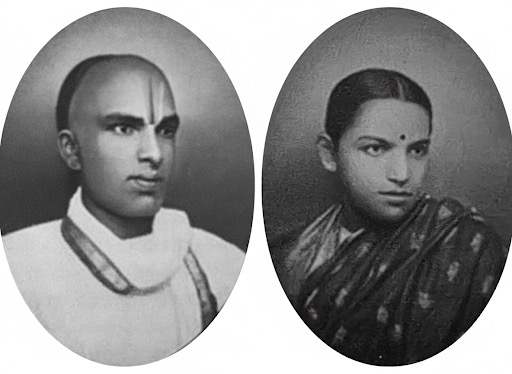
योगी-विद्वान श्री श्रीरंग महागुरू (१९१३–१९६९) · श्रीमती विजयालक्ष्मी (१९१९–२०२२)
Yogi-vidwan Sri Sriranga Mahaguru (1913–1969) · Srimati Vijayalakshmi (1919–2022)
वारशाचे स्वरूप
The Nature of Heritage
वारसा हा आपल्या आधीच्या पिढ्यांकडून मिळालेला ठेवा आहे. तो आपल्याकडे विश्वस्त म्हणून सोपवला गेला आहे — यासाठी की आपण त्याचे जतन करावे, त्याला अधिक समृद्ध करावे आणि पुढील पिढ्यांपर्यंत पोहोचवावे. आपल्या देशाला दीर्घकाळ अखंडपणे चालू असलेल्या संस्कृतीमुळे अत्यंत समृद्ध आणि वैविध्यपूर्ण वारसा लाभलेला आहे, जो आजही सजीव आणि ऊर्जावान आहे.
Heritage is the treasure received from our earlier generations. It is entrusted to us as custodians — so that we may preserve it, enrich it further, and pass it on to coming generations. Our country has an extraordinarily rich and diverse heritage owing to its culture that has continued unbroken over a long period — one that is alive and vital even today.
वारसा मूर्त स्वरूपाचा असू शकतो आणि अमूर्त स्वरूपाचाही. मूर्त वारशामध्ये नैसर्गिक वारसा — जसे की भूमी, नद्या, पर्वत, गुहा — तसेच सांस्कृतिक वारसा — जसे की शिल्पकला, वास्तुकला, पुरातत्त्वीय स्थळे — यांचा समावेश होतो. अमूर्त वारसा मात्र सर्वव्यापी असतो, परंतु अनेकदा तो लक्षात येत नाही किंवा ओळखला जात नाही. हा अमूर्त वारसा आपल्या ज्ञानप्रणालीत जिवंत आहे — भाषा, साहित्य, तत्त्वज्ञान, विधी, प्रथा, परंपरा, अन्न, वेशभूषा आणि अशा अनेक रूपांमध्ये.
Heritage can be tangible or intangible. Tangible heritage includes natural heritage — such as land, rivers, mountains, caves — as well as cultural heritage — such as sculpture, architecture, and archaeological sites. Intangible heritage, however, is all-pervasive but often goes unnoticed or unrecognised. This intangible heritage lives on in our knowledge systems — in language, literature, philosophy, rituals, customs, traditions, food, dress, and many other forms.
युनेस्को (UNESCO) सर्व प्रकारच्या वारशाच्या संरक्षणावर विशेष भर देते. भारत हा युनेस्कोच्या जागतिक वारसा यादीत अनेक वारशांची नोंद असलेला प्रदेश आहे. महाबलीपुरमची देवळे, कोणार्क सूर्यमंदिर, धोलावीरा येथील सिंधू संस्कृतीचे स्थळ — हे मूर्त वारशाची उदाहरणे आहेत. त्याचप्रमाणे योग, वैदिक पठण आणि रामलीला हे UNESCO च्या अमूर्त जागतिक वारसा यादीत समाविष्ट आहेत.
UNESCO places special emphasis on the protection of all forms of heritage. India is a region with numerous heritages inscribed on the UNESCO World Heritage List — from the shore temples at Mahabalipuram, the Konark Sun Temple, and the Indus Valley site at Dholavira as tangible examples, to yoga, Vedic recitation, and Ramlila as inscribed on UNESCO's Intangible World Heritage List.
या पुस्तकाचा दृष्टिकोन
The Approach of This Book
नवीन राष्ट्रीय शिक्षण धोरणाच्या अंमलबजावणीनंतर भारतीय संस्कृती, वारसा आणि ज्ञानप्रणाली यांना आजच्या शैक्षणिक अभ्यासक्रमात वाढते स्थान मिळत आहे. त्यामुळे या विषयाची ओळख करून देणारी अनेक विद्वत्तापूर्ण पुस्तके प्रकाशित झाली आहेत. बहुतेक पुस्तके विविध शाखांचा परिचय करून देणारी असून, त्यामध्ये व्यवस्थित संकलित माहिती दिलेली आहे. तथापि, भारतीय वारशाच्या या शाखांमध्ये असे काही मूलभूत तत्त्वांचे गाभे आहेत, ज्यांच्या आधारे विचार, कल्पना, प्रणाली, नियम व मूल्यांची एक विस्तीर्ण परंपरा उलगडता येते — हे पुरेसे लक्षात घेतले गेलेले नाही.
After the implementation of the New National Education Policy, Indian culture, heritage, and knowledge systems are receiving increasing attention in contemporary educational curricula. As a result, many scholarly books introducing this subject have been published. Most books are introductory surveys of various branches, presenting well-compiled information. However, within these branches of Indian heritage there are certain foundational cores of principles, on the basis of which a vast tradition of thoughts, ideas, systems, rules, and values can be unfolded — and this has not been sufficiently recognised.
हे अगदी तसेच आहे, जसे रसायनशास्त्र समजल्यावर कोणत्याही पदार्थाकडे किंवा संयुगाकडे घटकांच्या ठरावीक नियमानुसार बनलेल्या स्वरूपात पाहता येते. हे पुस्तक अशाच तत्त्वांवर — म्हणजेच मूल तत्त्वांवर — केंद्रित आहे. या तत्त्वांना एकत्र करून भारतीय संस्कृती, वारसा आणि ज्ञानप्रणालीचे एक व्यापक चित्र तयार होते. "का?", "काय?", "कसे?" — हे मूलभूत प्रश्न आजची युवा पिढी आणि विचारशील मने प्रत्येक शास्त्राला विचारतात. भारतीय संस्कृती, वारसा आणि ज्ञानप्रणाली बद्दल हेच प्रश्न विचारले जातात. आमच्या मते, भारतीय वारशाचे हे तत्त्वात्मक आकलन चालू काळासाठी सर्वाधिक योग्य आहे.
It is exactly like how, once chemistry is understood, any substance or compound can be viewed as built according to the specific laws of its constituent elements. This book is focused on precisely such principles — that is, first principles. By bringing these principles together, a broad picture of Indian culture, heritage, and knowledge systems takes shape. "Why?", "What?", "How?" — these fundamental questions are asked by today's youth and inquiring minds of every discipline. These same questions are asked about Indian culture, heritage, and knowledge systems. In our view, this principles-based understanding of Indian heritage is most appropriate for the present age.
SaMIKSHA चौकट — श्रीरंग मॉडेल
The SaMIKSHA Framework — The Srirang Model
भारतीय संस्कृती, वारसा आणि ज्ञानप्रणालीकडे "मूल तत्त्वांचा" दृष्टिकोन मांडण्याचे कार्य योगी-विद्वान श्रीरंग महागुरूंनी केले. त्यांच्या अनेक शिष्यांनी हा दृष्टिकोन अधिक परिष्कृत करून शास्त्रीय रूप दिले. भारतीय संस्कृती, वारसा आणि ज्ञानप्रणाली समजून घेण्यासाठी श्रीरंग महागुरूंनी ओळख करून दिलेली आणि त्यांच्या शिष्यांनी अधिक प्रणालीबद्ध केलेली ही "तत्त्वाधिष्ठित चौकट" श्रीरंग मॉडेल (SaMIKSHA) म्हणून ओळखली जाऊ शकते.
The work of presenting the "first principles" perspective on Indian culture, heritage, and knowledge systems was performed by the yogi-scholar Srirangamahaguru. Many of his disciples refined this perspective further and gave it a systematic form. The "principles-based framework" that Srirangamahaguru identified and his disciples systematised for understanding Indian culture, heritage, and knowledge systems can be known as the Srirang Model (SaMIKSHA).
या ग्रंथात या SaMIKSHA चौकटीसह उदाहरणे, दृष्टांत आणि प्राथमिक ग्रंथांतील संदर्भ दिले आहेत, यापैकी अनेक स्वतः श्रीरंग महागुरूंनी मांडलेले आहेत. आमची नम्र विनंती आहे की, या चौकटीचा काही अंश वापरला किंवा पूर्णतः वापरली तरी त्याचा उल्लेख "SaMIKSHA चौकट" किंवा "श्रीरंग मॉडेल" असा करावा.
This work presents examples, illustrations, and references from primary texts along with this SaMIKSHA framework, many of which were articulated by Srirangamahaguru himself. Our humble request is that whether any part or the whole of this framework is used, it be attributed as the "SaMIKSHA framework" or "Srirang Model."
श्रीरंग महागुरू — संक्षिप्त परिचय
Srirangamahaguru — A Brief Introduction
श्रीरंग महागुरूंचा जन्म एच. टी. श्रीनिवास रंगाचार्य (एच.टी.एस.आर.) या नावाने, म्हैसूरजवळील नंजनगुड तालुक्यातील हेडाटळे या गावात झाला. लहानपणापासूनच ते आध्यात्मिक प्रवृत्तीचे होते. केवळ एकविसाव्या वर्षीच त्यांनी योगातील सर्वोच्च अवस्थांमध्ये अवरोधरहित प्रवेश मिळवला. त्यांच्या मार्गदर्शनाखाली आणि प्रशिक्षणाखाली त्यांच्या सहचारिणी विजयलक्ष्मी श्रीमतींनीही त्याच उंचीपर्यंत प्रगती साधली.
Srirangamahaguru was born as H.T. Srinivasa Rangacharya (H.T.S.R.) in the village of Hedatale in the Nanjangud taluka near Mysore. From childhood, he was of a spiritual temperament. By the age of twenty-one alone, he had gained unobstructed access to the highest states of yoga. Under his guidance and training, his companion Vijayalakshmi Srimati also attained progress to the same heights.
काही काळ श्रीरंग महागुरू म्हैसूरच्या महाराजांच्या प्रसिद्ध योगशाळेत शिक्षक होते. ही योगशाळा आधुनिक योगाचे जनक मानले जाणारे श्री टी. कृष्णमाचार्य यांच्या मार्गदर्शनाखाली चालवली जात होती. ते पुढील काळातील नामांकित योगगुरू जसे की श्री पट्टाभी जोइस आणि श्री बी.के.एस. अय्यंगार यांचे समकालीन होते. परंतु श्रीरंग महागुरूंसाठी योग ही केवळ शारीरिक साधना नव्हती. तो सर्वोच्च आनंदप्राप्तीकडे नेणारा आध्यात्मिक मार्ग होता.
For a time, Srirangamahaguru was a teacher at the famous yoga school of the Maharaja of Mysore. This yoga school was conducted under the guidance of Sri T. Krishnamacharya, considered the father of modern yoga. He was a contemporary of later-renowned yoga masters such as Sri Pattabhi Jois and Sri B.K.S. Iyengar. But for Srirangamahaguru, yoga was not merely physical practice. It was a spiritual path leading toward the attainment of the highest ananda.
भारतीय संस्कृती, वारसा आणि ज्ञानप्रणालीचा पाया म्हणून योगाचे स्वरूप साकार करण्यासाठी ते आपल्या मूळ गावी परतले आणि १९४७ साली अष्टांग योग विज्ञान मंदिरम् याची स्थापना केली. त्यांनी अनेक तरुण शिष्यांची निवड करून त्यांना प्रशिक्षण दिले. हे शिष्य पुढे स्वतःही प्रतिष्ठित शिक्षक व ज्ञानी पुरुष बनले. त्यांची कन्नड भाषेतील प्रवचने भाषांतरित करून सुमारे २१ खंडांत "अमरवाणी" या नावाने प्रकाशित झाली.
To realise the form of yoga as the foundation of Indian culture, heritage, and knowledge systems, he returned to his native village and in 1947 founded the Ashtanga Yoga Vijnana Mandiram. He selected many young disciples and gave them training. These disciples themselves later became respected teachers and men of wisdom. His discourses in the Kannada language were translated and published in approximately 21 volumes under the name "Amaravani."
वाचकवर्ग
Audience
या पुस्तकातील मांडणीचा स्तर महाविद्यालयीन विद्यार्थ्यांपासून पुढील अभ्यासकांपर्यंत योग्य आहे. भारतीय संस्कृती, वारसा आणि ज्ञानप्रणालीबाबत जागरूकता आणि औपचारिक प्रशिक्षण आता माध्यमिक शाळा आणि महाविद्यालयीन स्तरावर सुरू झाले असल्याने, शिक्षकांना प्रशिक्षणात्मक साधनांची कमतरता जाणवू लागली आहे. या संदर्भात हे पुस्तक अशा प्रशिक्षण कार्यक्रमांसाठी पूरक ग्रंथ म्हणूनही उपयोगी ठरू शकते.
The level of presentation in this book is appropriate from college students to advanced researchers. Since awareness and formal training in Indian culture, heritage, and knowledge systems has now begun at the secondary school and college level, teachers have begun to feel a shortage of instructional resources. In this context, this book can also serve as a supplementary text for such training programs.
तसेच, हे पुस्तक त्या अभ्यासकांसाठीही योग्य आहे जे पारंपरिक शाखांकडे नव्याने पाहू इच्छितात आणि भारतीय दृष्टिकोनातून त्यांचा पुन्हा शोध घेऊ इच्छितात. हे पुस्तक भारतीय संस्कृती, वारसा आणि ज्ञानप्रणालीचे प्रथम ओळखपत्र स्वरूप आहे. यासाठी पूर्वअभ्यास किंवा आधीचे ज्ञान आवश्यक नाही.
The book is also suited for those researchers who wish to look at traditional disciplines afresh and wish to rediscover them from an Indian perspective. This book is in the form of a first introduction to Indian culture, heritage, and knowledge systems. Prior study or prior knowledge is not required for this.
या कार्यातील जर काही गुण असतील, तर ते दैवी गुरु-दांपत्य श्रीरंग महागुरू आणि श्रीमती विजयलक्ष्मी यांच्या पवित्र स्मृतींना अर्पण आहेत. आणि जर काही दोष असतील, तर ते लेखकांच्या मर्यादांमुळे आहेत.
If there are any merits in this work, they are offered to the sacred memory of the divine guru-couple Srirangamahaguru and Srimati Vijayalakshmi. And if there are any deficiencies, they are due to the limitations of the authors.
— बंगळूरू | Bengaluru
डॉ. मोहन राघवन · डॉ. हर्षा सिम्हा एम.एस. · डॉ. रामास्वामी सी.आर.